#16 Harbor Review

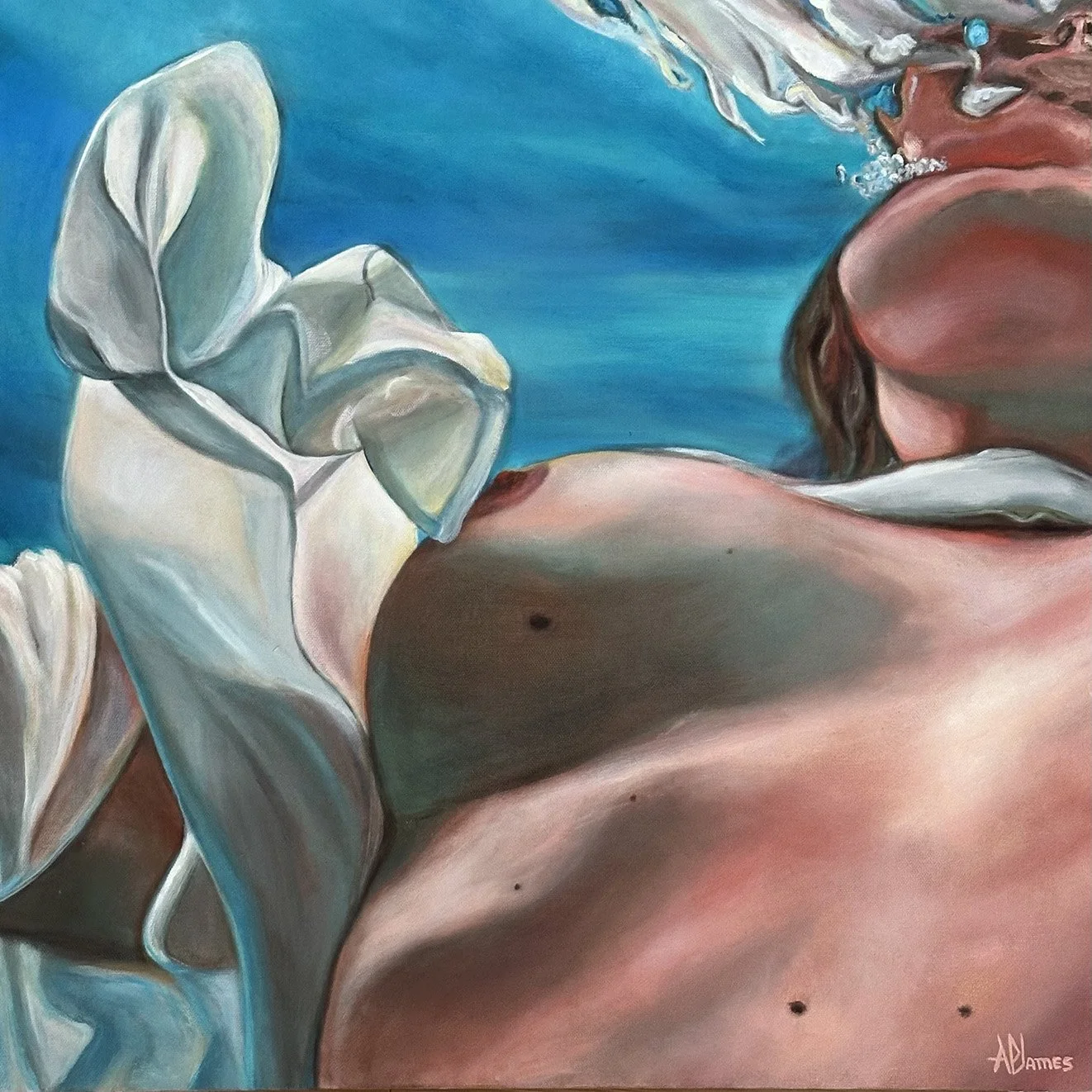
Coming Up For Air: Shallow
by Anne Pollard James
EDITOR’S NOte
Dear readers, ardent lovers of black lines—
For our sweet sixteen (issue), we at Harbor Review are thrilled to have found (and now share) such beauty even amidst the horrors that are now the norm. “Now” being redacted because, of course, incredible horrors have always unpetaled—what has changed is who suffers for them, experiences them, lives them. Is able to tell them. Many of the poems you will find within this issue reflect that: poems of anticipating harm and violence, of inheritance and loss, of the ephemeral impermanence that notches our lives.
It seems a near-impossibility, selecting just ten amongst so many words and voices, but throughout history both “16” and “10” have carried immense significance, across many cultures and lands. On these lands, which are now too-often called the “United States,” the sweet sixteen has its roots in Europe (of course) with those debutante balls, girls “coming out” as proper, grown, ready to be passed from one man to another. Then, in mid-century, Neil Sedaka’s “Happy Birthday Sweet Sixteen” sealed this significance, followed by MTV’s “My Super Sweet Sixteen.” Which of the latter two is more problematic is up for debate, but regardless they are both cradled in the capsule of what is branded Americana.
Then we have the number ten: representative of the end of cycles in many Indigenous cultures as well as within tarot, the ten commandments, the ten avatars of Vishnu, the Jívaro/Shuar translation of “ten” meaning “I have finished both hands.” So here we are. We, the collective we—the poets and readers and editors—give to you ten poems, the completion of both/all hands, an offering of something most wonderful in the depths of the woe: poetry. And, as you know, poetry has never been simply words, whether written or spoken or both. Beyond the non-words, the white space, the rhythms and beats, it is a means of telling, of connecting, through life in all its magnificence and terror and everything in between . . . but in such a way that we are reminded (still) of the marvel of it all. Words arranged in such loveliness that they echo, remind and call to mind, the sublimity of life.
The sublimity of love.
Jessica Doe Mehta
June 2026
Retreat
by Sharon Fagan McDermott
I am thinking of the shark fisherman of August
many years ago, laughing as they cast their heavy lines
off the pier on St. Simon's Island. How hot it was
that night. How high the tide. The air reeked of chum.
How I loved being part of something, which I knew
absolutely nothing about. How woozy the moon.
How I rooted for the sharks and whispered this
to the ocean below. How bloody the heads of bluefish
and mackerel, the bucketed bait. How happy my friend
and I were. The fishermen said we could stay if we were
quiet. Gladly, we welcomed the silence swelling around us,
only the sound of waves pulsing pylons. Silence was wet air,
sacrificed fish, blurred stars. Silence was salt and the fishermen’s focus
on the lines that sank beyond sight into the private world
of the sea. My friend and I were on our own, seeking peace,
and we found, instead, delicate fish bones, gators in the creeks
where we biked, and a man mopping his face with a filthy T-shirt.
We found where indigo sea met indigo sky. Which was which—
and who cared? All was all and silence, the moon of the night.
Swim away, shark, I sang in my head. I couldn’t name
a single constellation, though they swung low and glaucous.
Life ballooned. I pocketed every star.
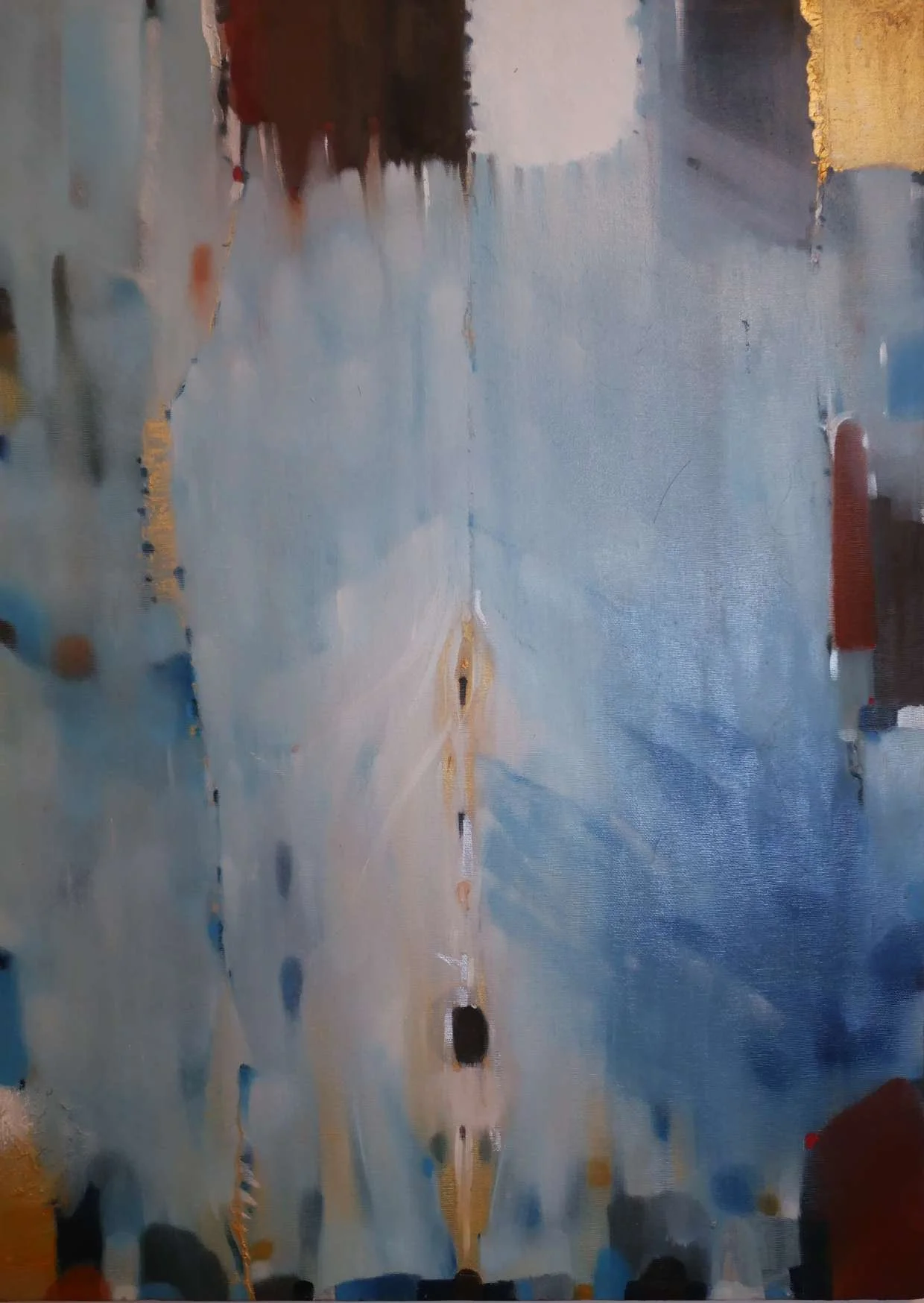
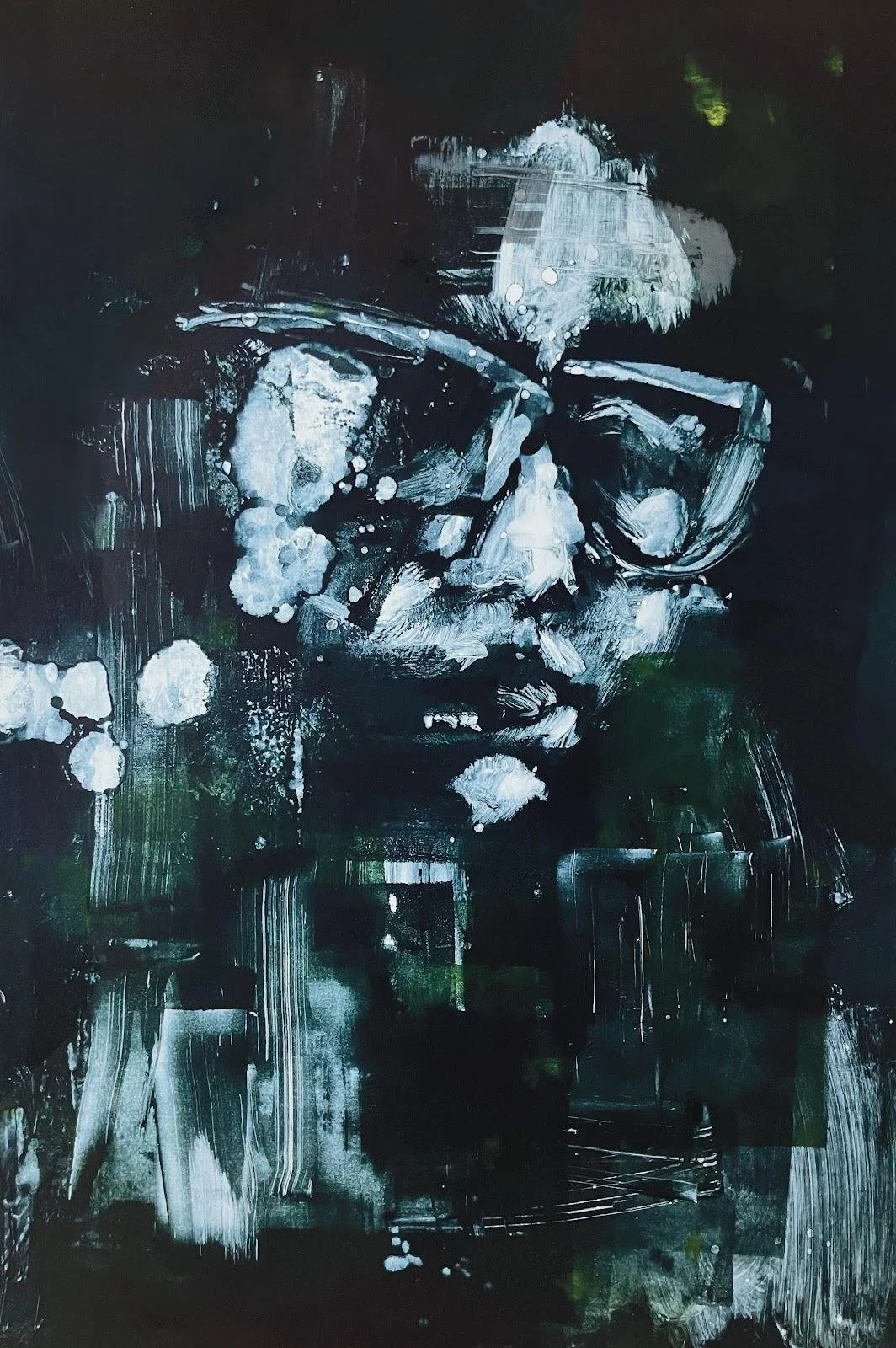
The soft and thin soaring of a first light, Tiziana Rasile
With light in hand
by Michele M Miller
wait through the ember months, look up before you’re done
with the backs of envelopes and your lists of groceries and
kindling and concrete mortality and the thick of desert horizon,
blind yourself, there is no reason not to, the dark dark rolls a
flashbulb around its mouth and swallows, it shows you things,
shows you cold birds beneath the windowpane and the skin
tone of roses you could not grow, shows you and shows you
and most of the time it is something bearable, but sometimes
the old house flares up and slaps you in the face and says see
the redwood slivers from the locked fence of your childhood,
the rocking horse on the back porch, your knees bent and
hands holding the imprint of reins
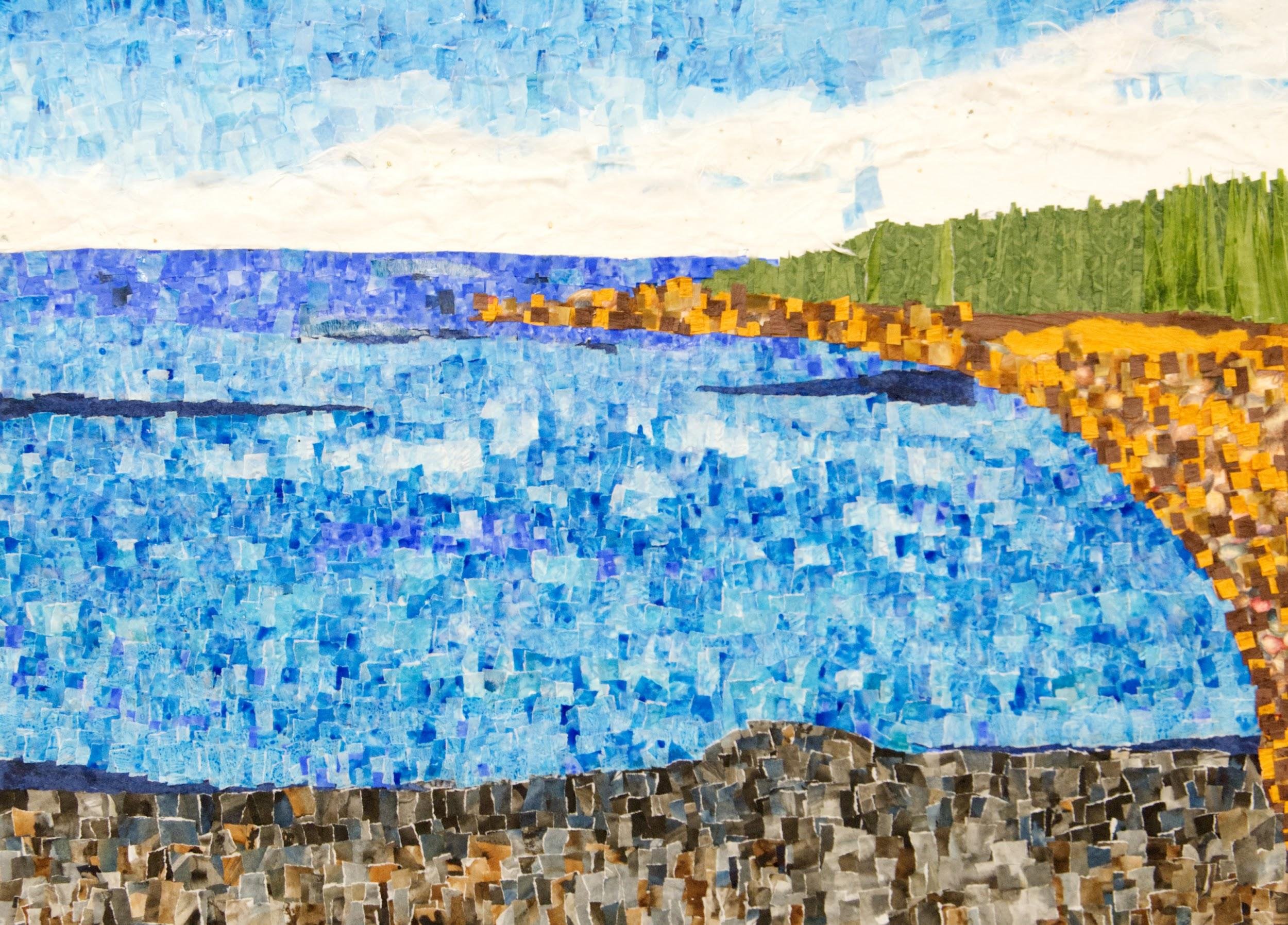
A Very Long Conversation, Amy Robinson Gendrou
The Zone of Interest
by Matt Coonan
We archive the day by activity. Food shopping.
Couch naps. Lukewarm showers. Pouring seed
into a small home for paused flight. Pointing out
the subtle variations in beak size. Dragging
a rusted firepit to the curb. Placing tiger lilies
on the mantle. Reheating honey ham & lasagna.
Unwinding in the den. Choosing a film. The one
about a family planting lilies in a garden
as families are fed to fire yards away. The day-to-
day routines. Gentle thrills. The hog slaughtered
to seat a family at the table. Children playing
catch with explosives. A serene blue sky
swallowed by ash that will coat the flower beds
a soft gray to ignore for the promise of rain.
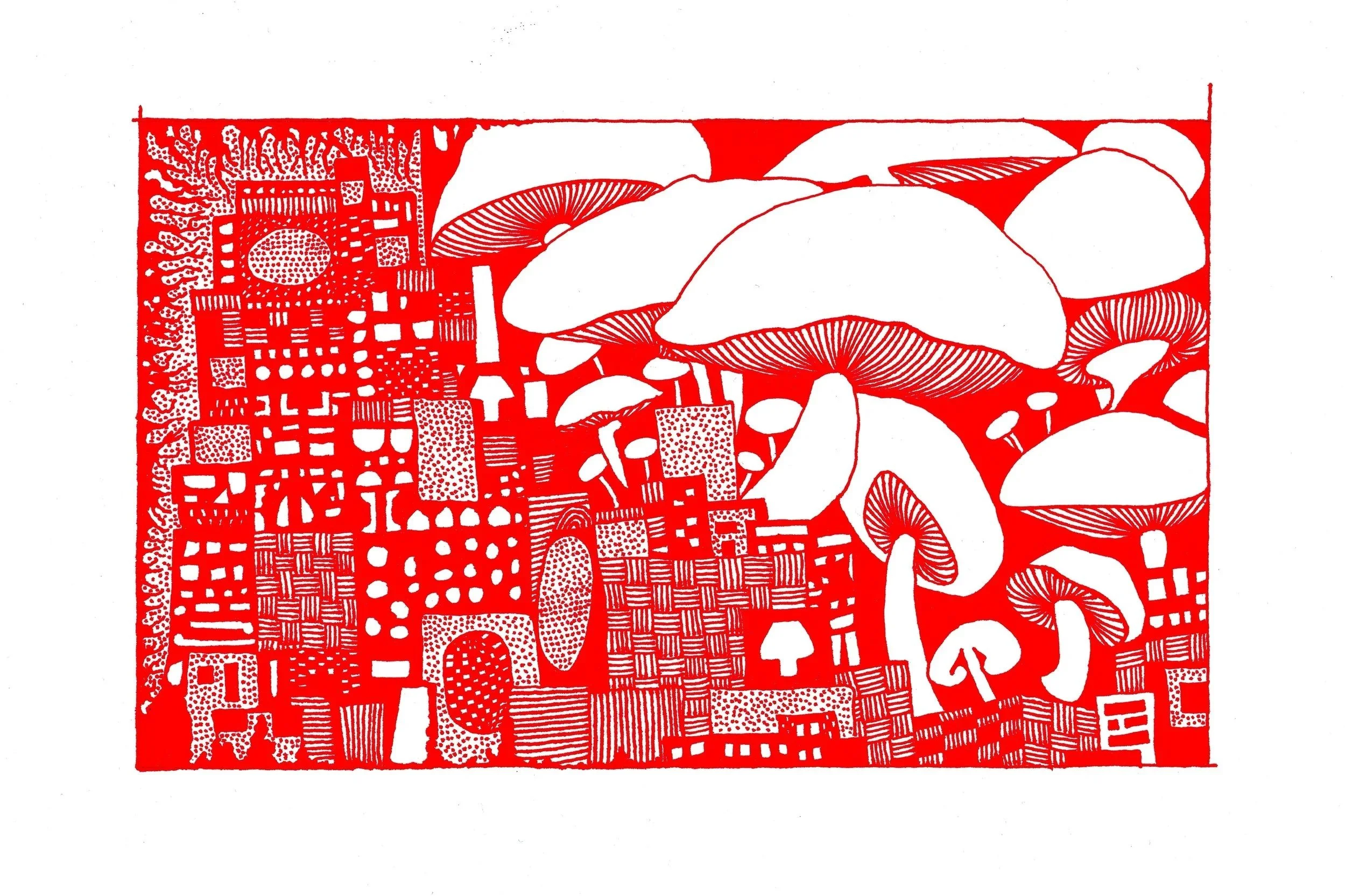
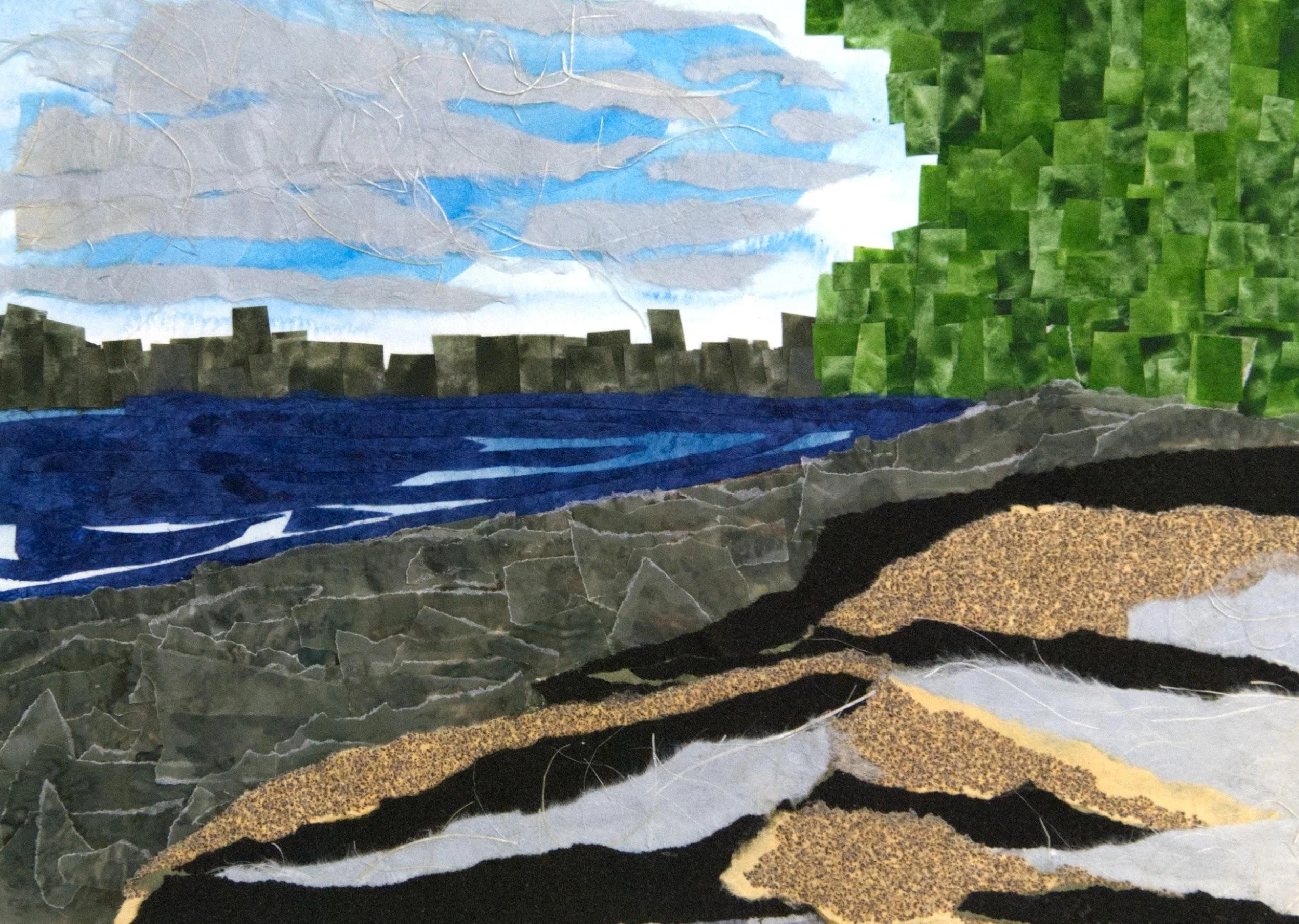
City, Pranav Prakash
Poem Because In Any Given Room, I Anticipate Violence
by Rita Mookerjee
clever as always my phone tries to finish my sentence
sees the word active & knows that shooter must follow.
her next guess is volcano which is also correct because
my hands are molten as I decide how to flip the table
& shove it against the door. I decide that a mechanical
projector arm will make a good bludgeon while I wait
to see why all the lights have gone out. the good news is
that some alarms are false. the bad news is that I live
braced for a nightmare my hands like blades. my rage is salt
& mortar. hours later I realize that I never even bothered to
grab my phone. clever as she is my phone is only steel
& plutonium not a shield from bullets.
I’m not a fighter says R to me after class, her hair looping red.
I will die for you we promise each other. one american day.
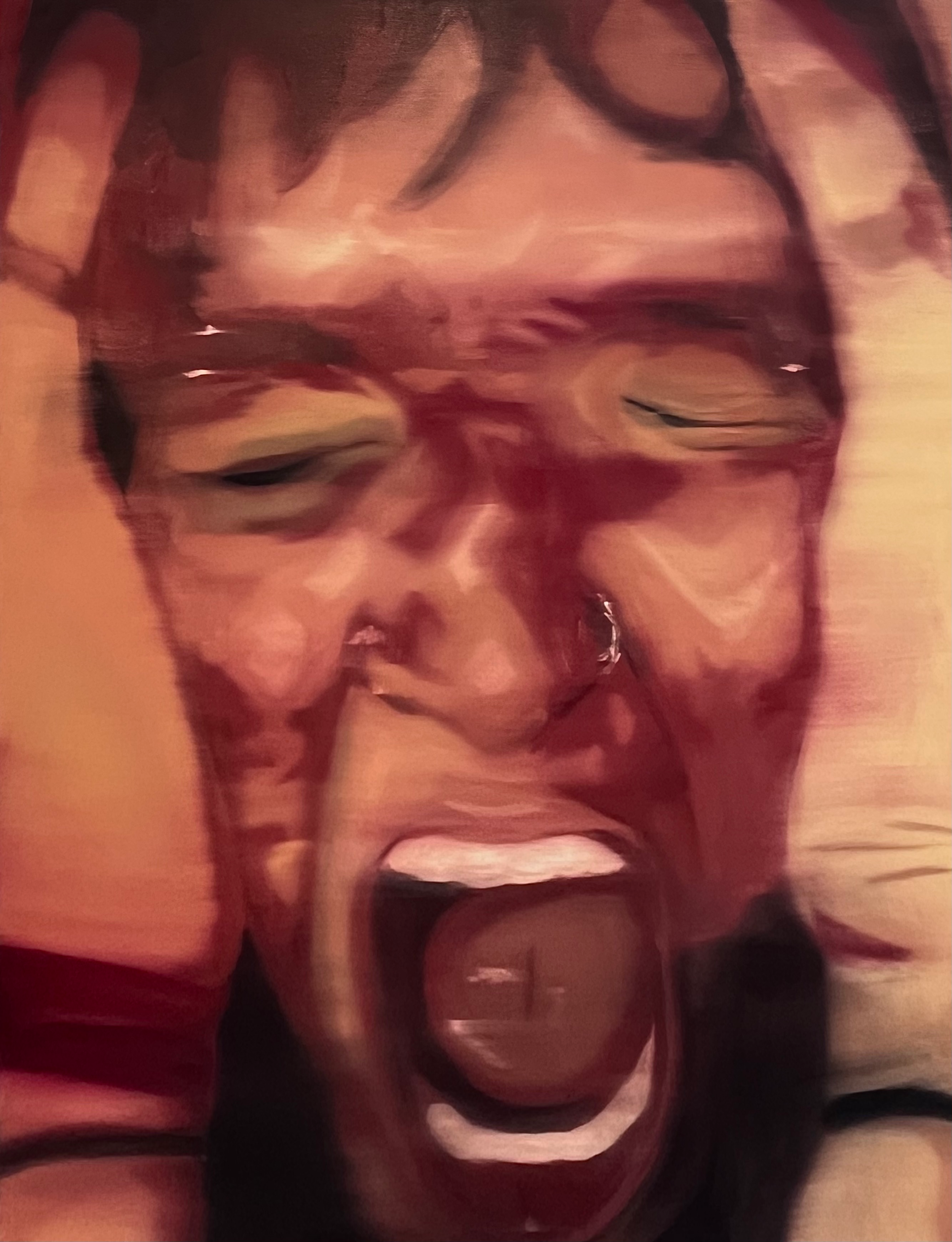
The Final Show, Clara Lowe
Takoyaki, St. Marks Place, 2008
by Rita Mookerjee
you had only seen them on TV
alongside counters & tall stools
& tentacles of steam & the beery
perfume of spent sake bombs
not that people in Tokyo do sake
bombs your octopus balls are
scalding but it’s 2AM so you let
gold bonito ribbons proclaim your
drunkenness like a house sigil on
2nd avenue you don’t leave your
dorm without eyeliner and lipstick
you don’t burn your mouth because
you have trained it to open wide
you think you have a plan : to pour
the city into a clear bowl & drink
instead you fry yourself in its batter.
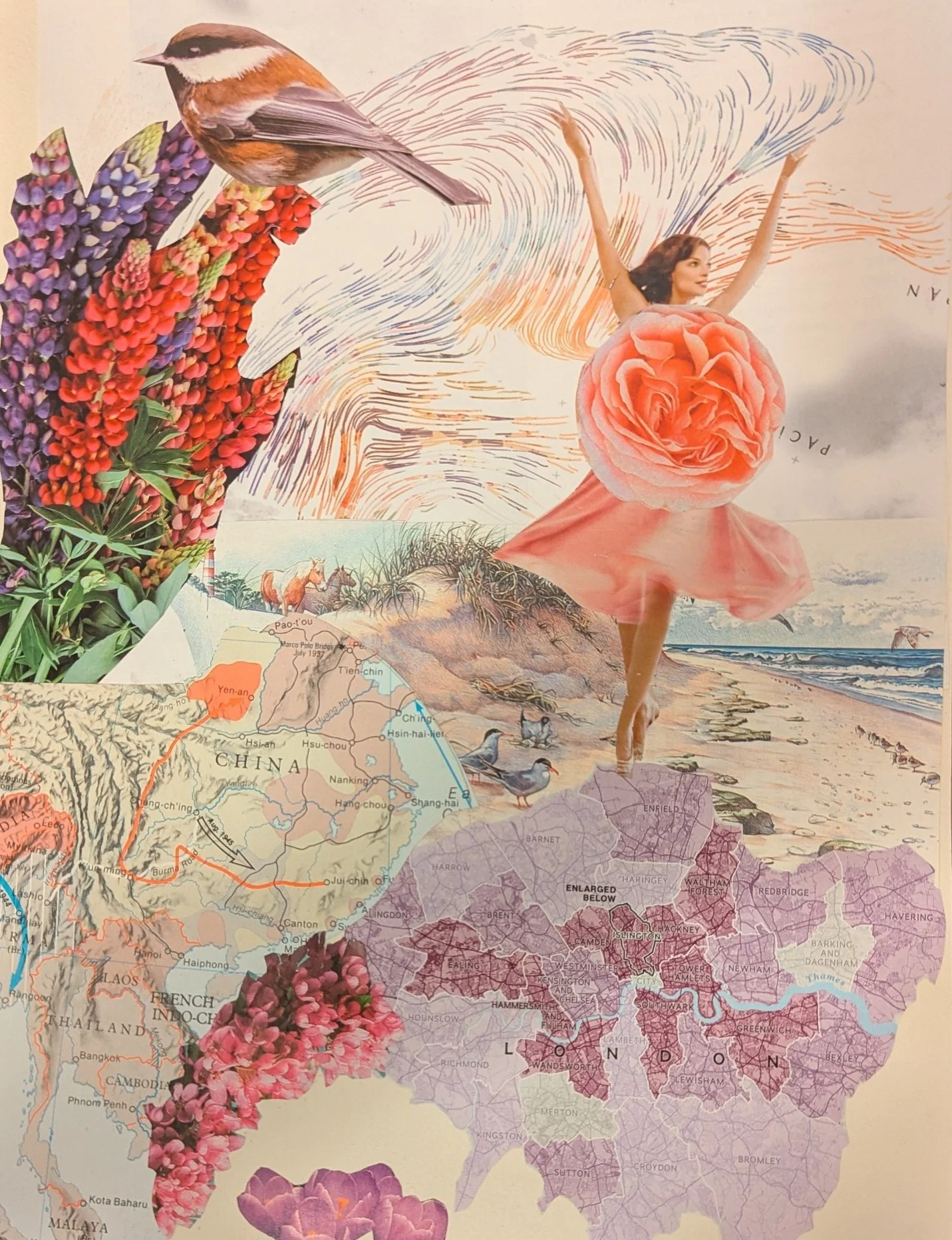
Lift Off, Karen George
On Language
by Dallas Raquel Klein
I hated reading poems by Latinx writers aloud
in college. White classrooms
with students eager to read together, line by line—
someone always begged to read aloud the Spanish version
like a game, a moment
for us to make mistakes, to parody
our seriousness. They laughed at their failing
tongues. I winced. I burned.
Oh, I thought you spoke Spanish?
Around the room we’d read.
Each time around
a reminder of what was taken.
Mom can’t even roll her tongue.
Dad thinks it’s funny—calls her a coconut.
I think america beat it out of her.
My turn would come
back around, and I’d feel fire
ants in my mouth.
I made sure to laugh loudest in the room,
masking, howling, playing
dress up with my teeth.
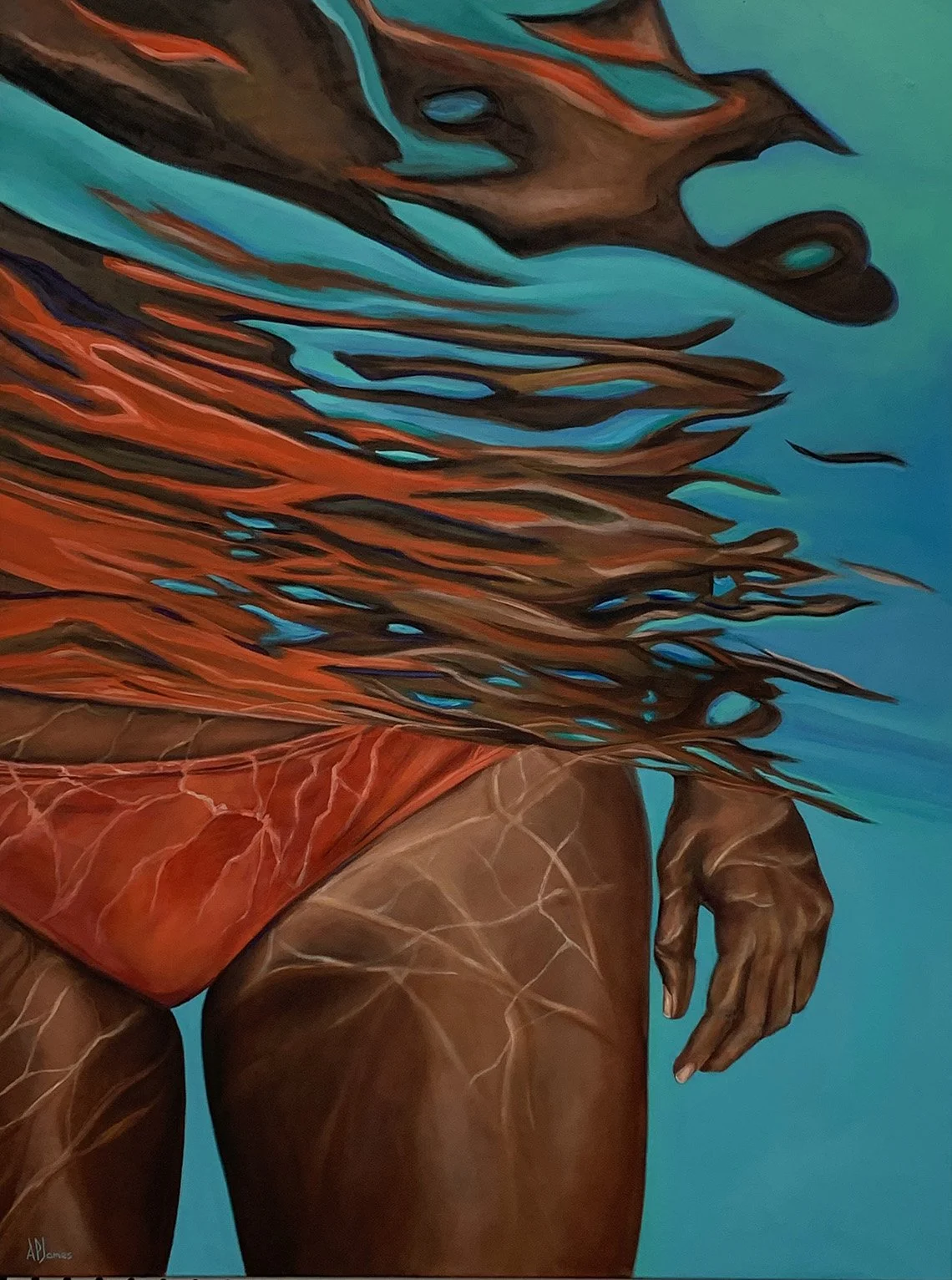
Coming Up For Air: Shallow, Anne Pollard James
Questions for my body after sex
after Eduardo C. Corral
by Tran Tran
Were your parents home?
What did you crave: his fingers or loneliness?
Who did you look like when you were naked?
Did you tell him about your pubic hair?
How hard were his teeth?
How many times did you respond fuck me to his I love you?
Fake moans?
Who taught you to use your tongue like that?
Did you cry?
New metaphor for pain?
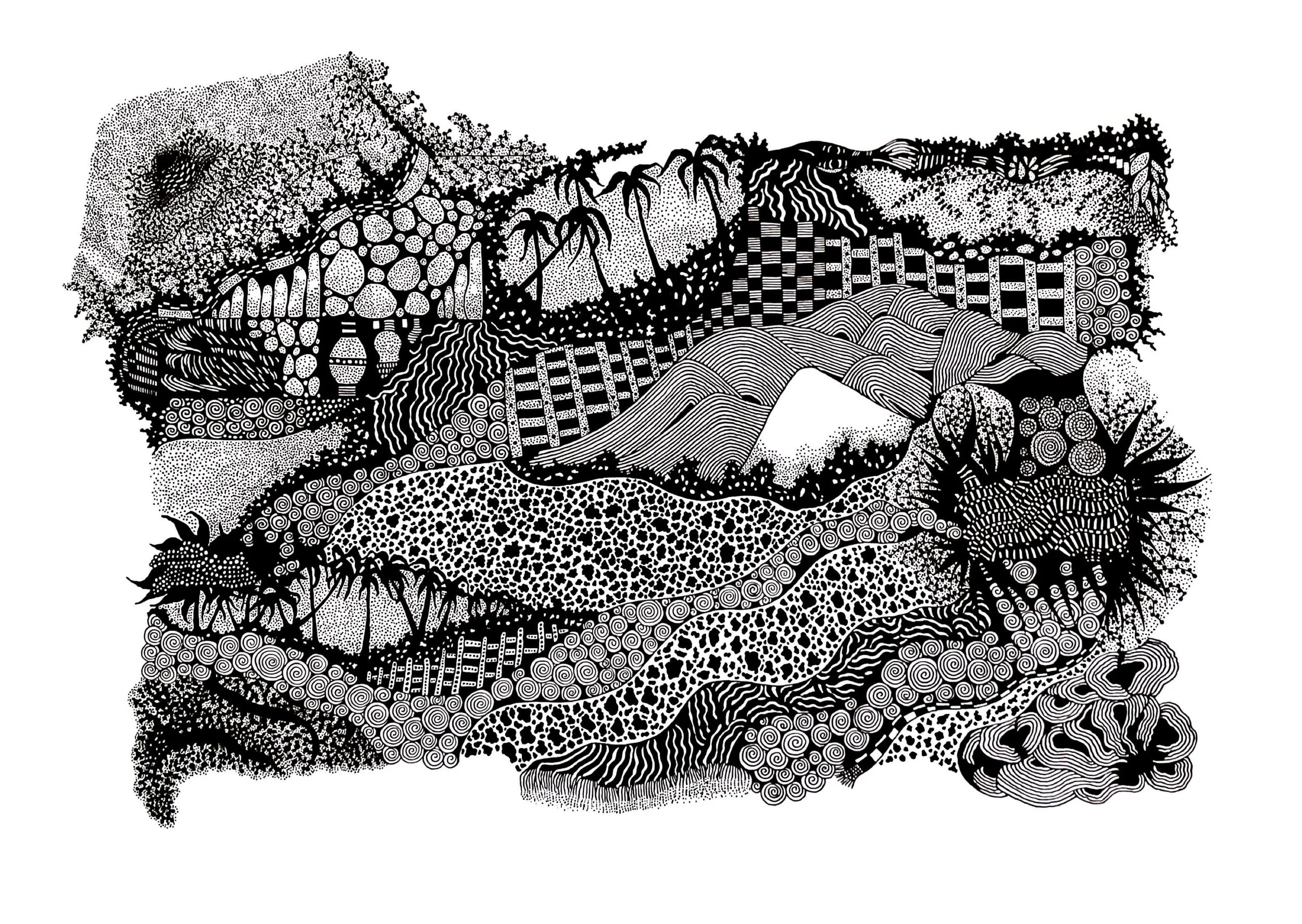
A Yama, Pranav Prakash